

Comparing Saucony vs Hoka running shoes is a fun one for me because I’ve run in both for many miles. While the shoes might look different due to the maximal design of Hoka’s there are a lot of similarities. We’re going to compare specific models and features to guide your choice.
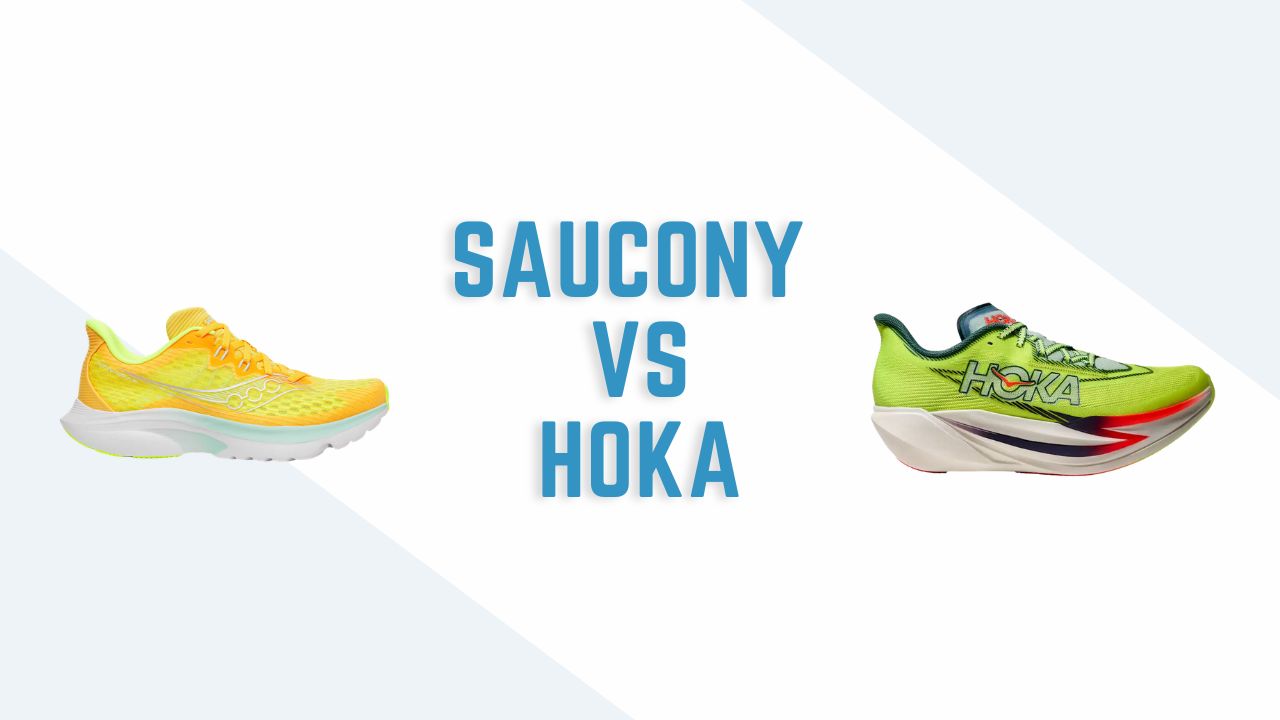
Each chooses to market a little differently, but when it comes down to it they have minimal to maximum cushioning and all the options in between that ensure you’ll find the shoe that feels right for you. Because really FEEL is an important factor.
We’ve got details on construction, fit, feel, fabric and more.
Let’s start with some of the big differences and move in to comparing specific models.
Hoka Vs Saucony Key Differences
Saucony and Hoka offer similar features and models for all kinds of runners, from the new runner to Ultramarathoner to the flat-footed or high-arched.
Hoka One One first became popular with Ultrarunners and has since moved in the to main stream of running. I myself have run in a number of models and previously compared Hoka styles.
Meanwhile Saucony has been around for LONG time with a huge line up of shoes.
I break down the differences in more detail below, but here’s a quick overview:
Hoka Running Shoes
- Maximal shoe – has the larger sole which provides stability and smooth ride (that’s called stack height)
- Usually more cushioned than traditional models
- Most are a low heel drop 6-8mm
- Some state they run narrow, but compared to other brands like Nike I disagree
- Does have some casual shoes, gym shoes and recovery sandals
Saucony Running Shoes
- Often noted as fitting a more narrow foot, with a smaller toebox
- Wide range of heel drops from traditional 12mm to lower 4mm
- Well known for the casual shoes as well as their running shoes
- Focus is on lighter shoes that provide maximum comfort
- Has an ongoing Fit Tester program to continually update shoes
HOKA Vs Saucony Models
Now that you know more about each brand, let’s look at their top models in each of the main categories. There’s no winner declared here because all are great shoes, it’s just about which one is best for your foot.
With each of these, they are the top models so numbers are constantly changing as they make a little upgrade, but On doesn’t keep adding numbers to the shoe name like most brands doe.
Stability Running Shoe
👉Saucony Guide
In this model, Saucony not only paid attention to the support below, but uses the upper for additional stability. It wraps around your foot, helping you feel more secure in the shoe.
We love that nothing here feels overcorrective and there is no firm medial post, meaning you actually feel the cushion underfoot.
The real star of the show is the PWRRUN foam, which Saucony says is softer and even more responsive in this version of the Guide. In these it was the perfect level of softness, without sacrificing stability and responsiveness.
Checkout my comparison of the Saucony Ride vs Guide – two of their most popular shoes that are often confused for each other because of the similarities in fit and feel.
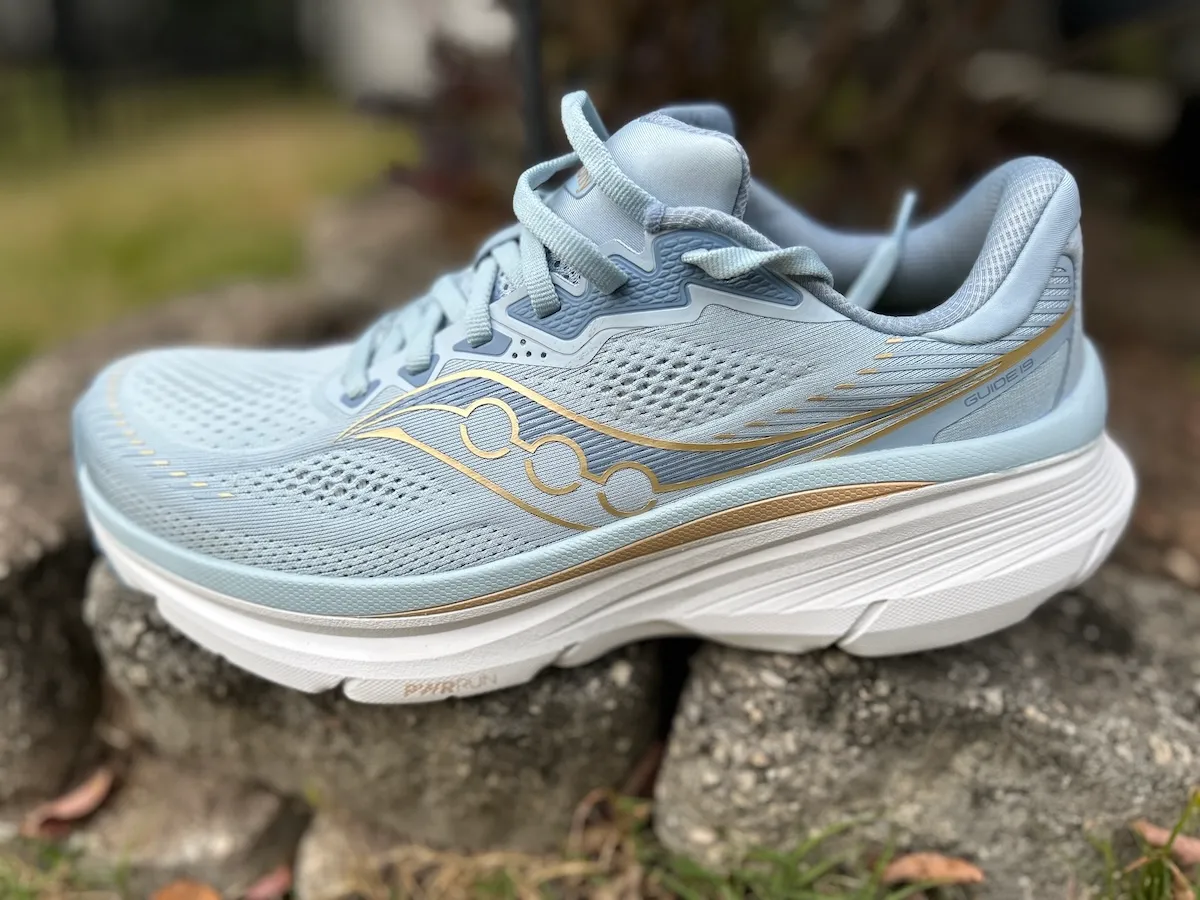
- Weight: 9.7 oz Men’s, 8.9 oz Women’s
- Stack Height: 35mm
- Heel Drop: 6 mm
- Available in 15 Colors (based on the Guide 18)
- Available in wide and extra wide (D and 2E width for women, 2E and 4E for men)
- Available on Saucony.com for $140
- Read our full review of the Saucony Guide 19 here >>
👉HOKA Gaviota
We also love the way Hoka does stability, especially in the recently updated Gaviota.
Instead of a harsh medial post, you’ll find the guidance is absolutely there, but feels a little different. With the H-frame design, it feels like it’s hugging your heel and providing stability that isn’t just forcing your foot into position, but rather lateral support overall.
It’s another shoe with the Hoka rocker that helps give you that forward roll, so you don’t feel like you’re just getting stuck in the cushion.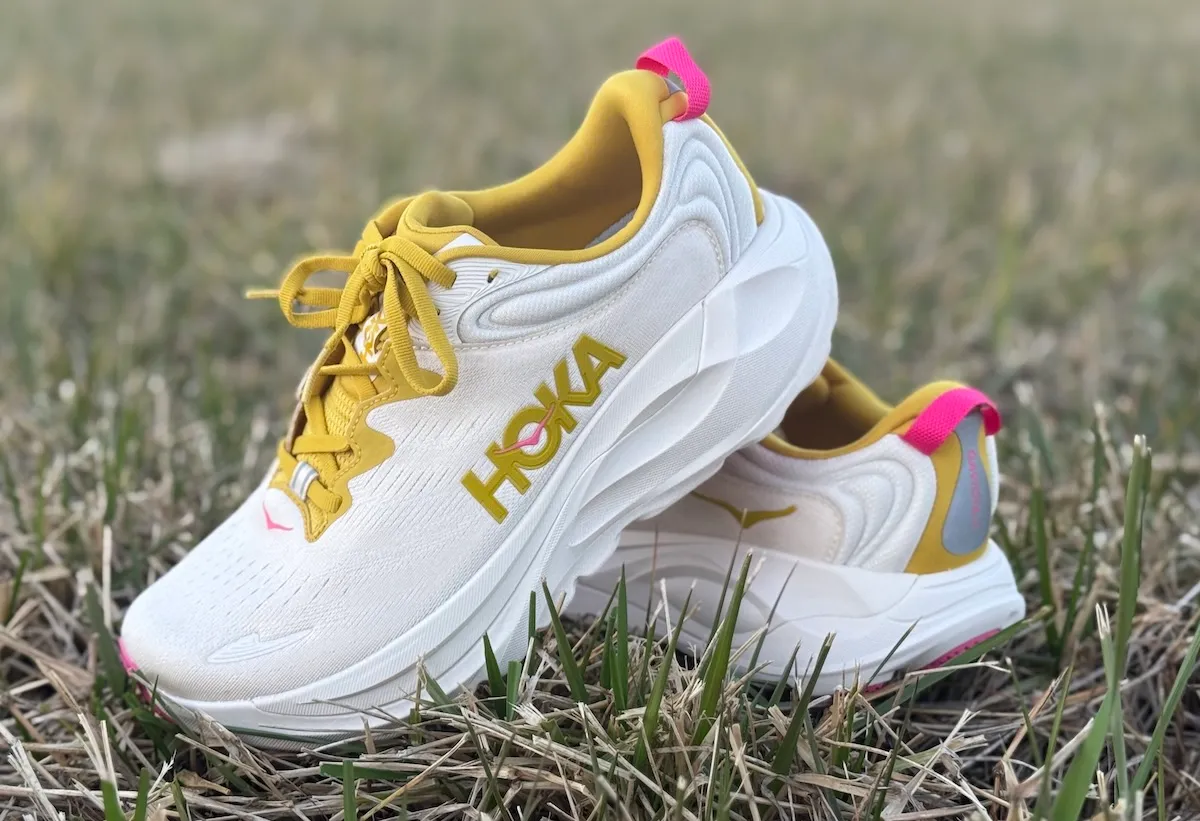
- Weight: 10.25 oz Men’s, 8.62 oz Women’s
- Heel toe drop: 6 mm
- Available in 4 Colors
- Available in wide and extra wide
- Available on Hoka.com for $180
- Read our full review of the Hoka Gaviota 6 here >>
Neutral Running Shoe
👉Saucony Ride or Saucony Kinvara
These two are the most popular neutral running shoes from Saucony. Both have been around for many years and continued to improve.
What’s the difference in the Ride vs Kinvara?
- Cushioning is thinner on the Kinvara making it often more suitable for half marathon and under
- Kinvara is often seen as your tempo run or race shoe, the Ride your everyday training
The Ride is focused on cushioning and support, while the Kinvara is designed for a more natural and lightweight feel.
Saucony Ride
The ride is a great everyday trainer. I’ve used it a few times throughout the years.
It’s a great option for those who want a little more support for those longer runs. While not a stability shoe, it’s going to have the slightly higher heel drop and weigh just a bit more for the added cushion and support.
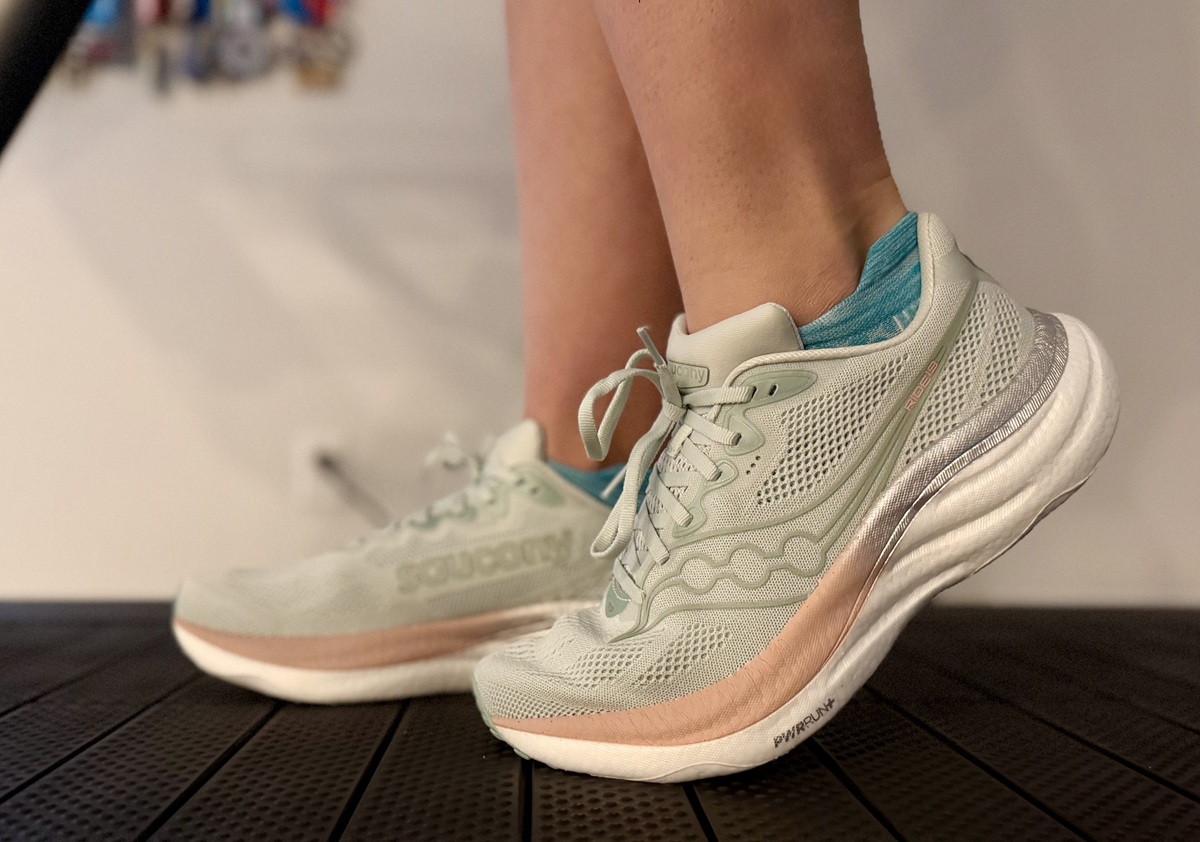
- Weight: 7.7 oz Women’s, 8.9 oz Men’s
- Stack Height: 36/28 mm
- Heel Drop: 8mm
- Available in 10 Colors
- Available in wide in limited colorways
- Available from Saucony.com for $140
- Read our full review of the Saucony Ride 19 here >>
Saucony Kinvara 15
This has been one of my go to shoe’s for many years. The newest model is starting to feel like a departure from what I loved in 2010, but it’s still a shoe that I’ll continue to wear.
The stack height has increased to add more cushion and stability to the run, but as you can see, they are holding on to that lightweight and low drop. It’s hard to find low heel-to-toe-drop shoes, so this is a big-time winner.
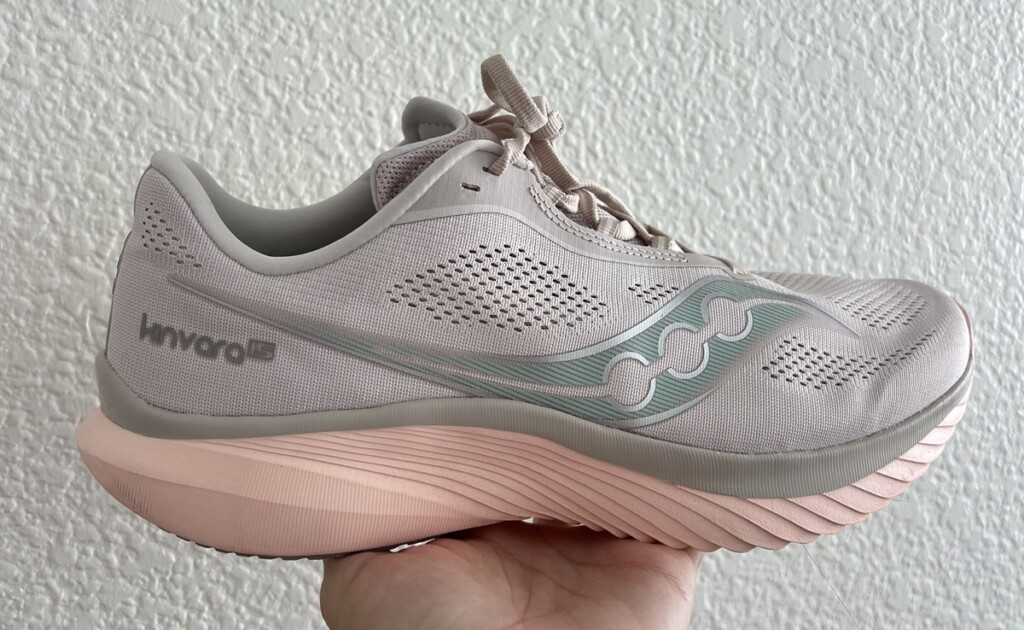
- Weight: 7.0 oz Men’s, 6.2 oz Women’s
- Heel drop: 4 mm
- Available in 8 colors
- Available in wide
- Available now on Saucony.com ($120)
- Read our full review of the Saucony Kinvara 15 here >>
👉Hoka Clifton 10
The Clifton was their first model and I actually got to run in version 1, 2, 6, 7,8, 9 and now 10! It’s their trademark shoe and a great one for any runner who wants cushion and to test out a maximal shoe.
This is what I would call an entry to Hoka running. You’ll get used to the higher stack height, while enjoying the benefits of a normally cushioned very lightweight shoe that also has a bit of stability.
As with all of these shoes you’ll find the upper is designed to be light and breathable.
It’s cushioned without being too soft, so it’s still responsive. I’ve listed this as one of my best marathon running shoes.
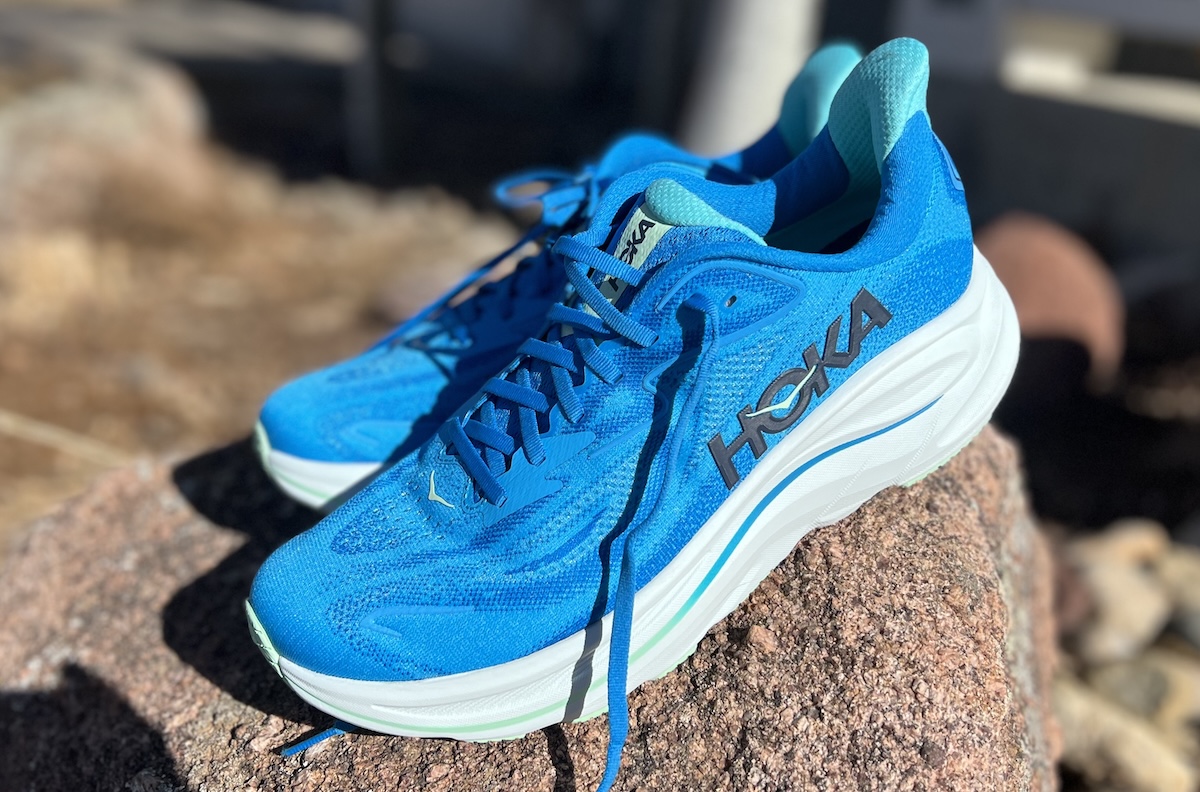
- Weight: 9.8 oz men’s, 8.0 oz women’s
- Heel Drop: 8 mm
- Available in Wide (and extra wide in men’s)
- Available in 7 Colors
- Find it on Hoka.com for $150
- Check out our full review of the Hoka Clifton 10 here >>
Once you get past the fact that they look big, you’ll quickly notice they feel lighter than many other styles. And every ounce counts for me when I’m hitting 20+ mile long runs. I also appreciate that the wider base naturally supports the foot a bit more.
Cushioned Running Shoe
👉Saucony Triumph 23
I’ve used the last few models of the Triumph for MANY training miles and definitely recommend. Though I will be 100% honest and say I liked previous models better than the current one.
The Saucony Triumph is known for its plush cushioning, which you can absolutely feel more than in the Saucony Ride. The foam combo makes it durable. The lower stack is more comfortable for so many and now they lighter weight is an added bonus on those long run days.
It’s a shoe that the middle and back of the pack can happily wear on half marathon and marathon race days!
While it’s by no means a speed shoe, the foam used does help with energy return compared to other big plush cushioned running shoes.
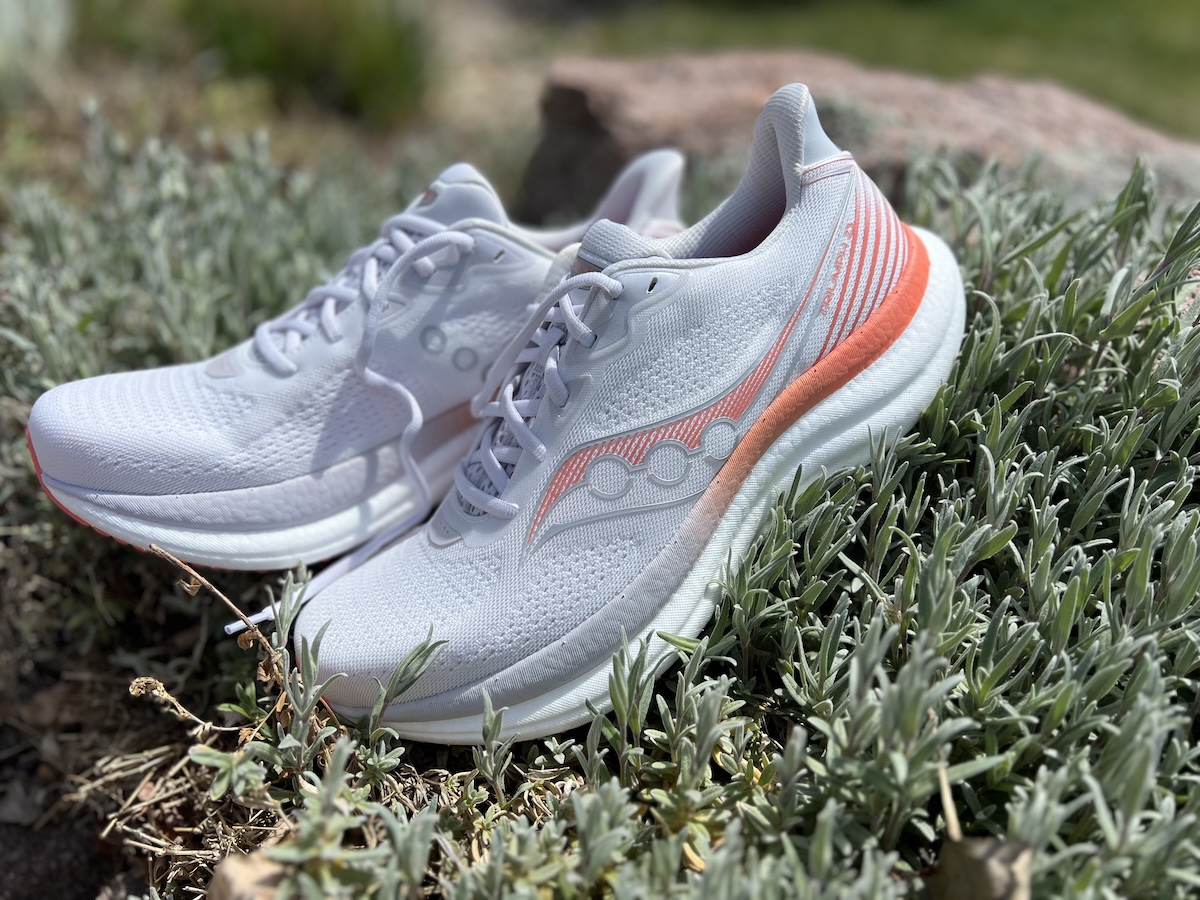
Whether you’re heading out for a 5k or your 20-mile long run, this shoe provides the comfort and support you need, especially on the days when your legs are feeling it a bit more than usual.
- Weight: 9.2 oz men’s, 8.4 oz women’s
- Heel drop: 10 mm
- Available in 10 colors
- Available in wide
- Available now on Saucony.com $160
- Check out our full review of the Saucony Triumph 23 here >>
👉Hoka Skyflow
I am super excited to be updating this article with the Skyflow to replace the Bondi. While it was a good shoe, it was so plush that I found some runners ended up with back pain because they simply sink in to the show and lose good form.
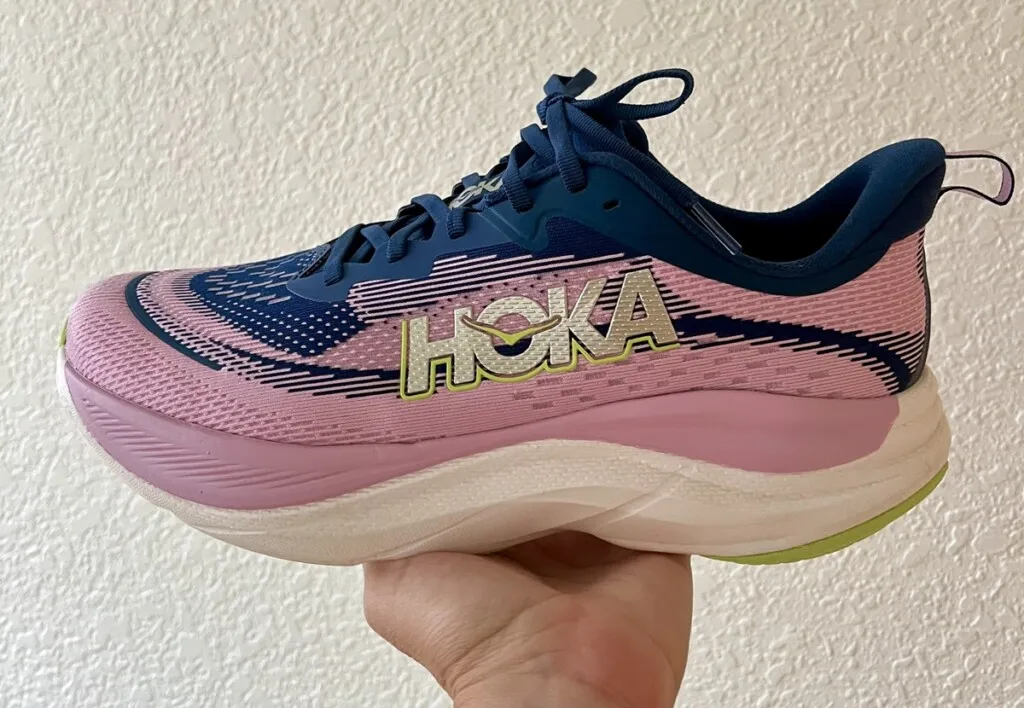
The Skyflow will not have that issue and you’ll be getting an even better quality foam! In fact, you’re getting the same supercritical foam that we see in top end shoes. That means cushion with a little bounce.
Due to the weight, this is definitely not a fast tempo run kind of shoe and yet with the same cushion as the Mach, it’s 100% a shoe that I could a lot of runners using on race day for the half or marathon. It just feels good underfoot and has enough room in the shoe for your foot to swell a bit on those long runs.
- Heel drop: 5 mm (41 mm stack on men’s)
- Weight: 8.6 oz women’s, 10 oz men’s
- Available in wide
- Available in the most sizes and colors on HOKA.com for $160
- Read my review of the Hoka Skyflow>>
Trail Running Shoes
While Hoka has a much broader line up of trail shoes, both brands have some very popular models.
👉Saucony Peregrine 16
The Peregrine 16 brings back support and confidence on technical trails while still feeling easy on smooth singletrack.
It keeps things comfortable with a nice amount of padding around the back of the heel collar. In addition to the slightly padded tongue with a PWRRUN+ sock liner, there is gusseting for about two-thirds of the length just to keep things from sliding side to side over the miles.
And the gaiter hooks are still there for that added accessory on the gravel terrain.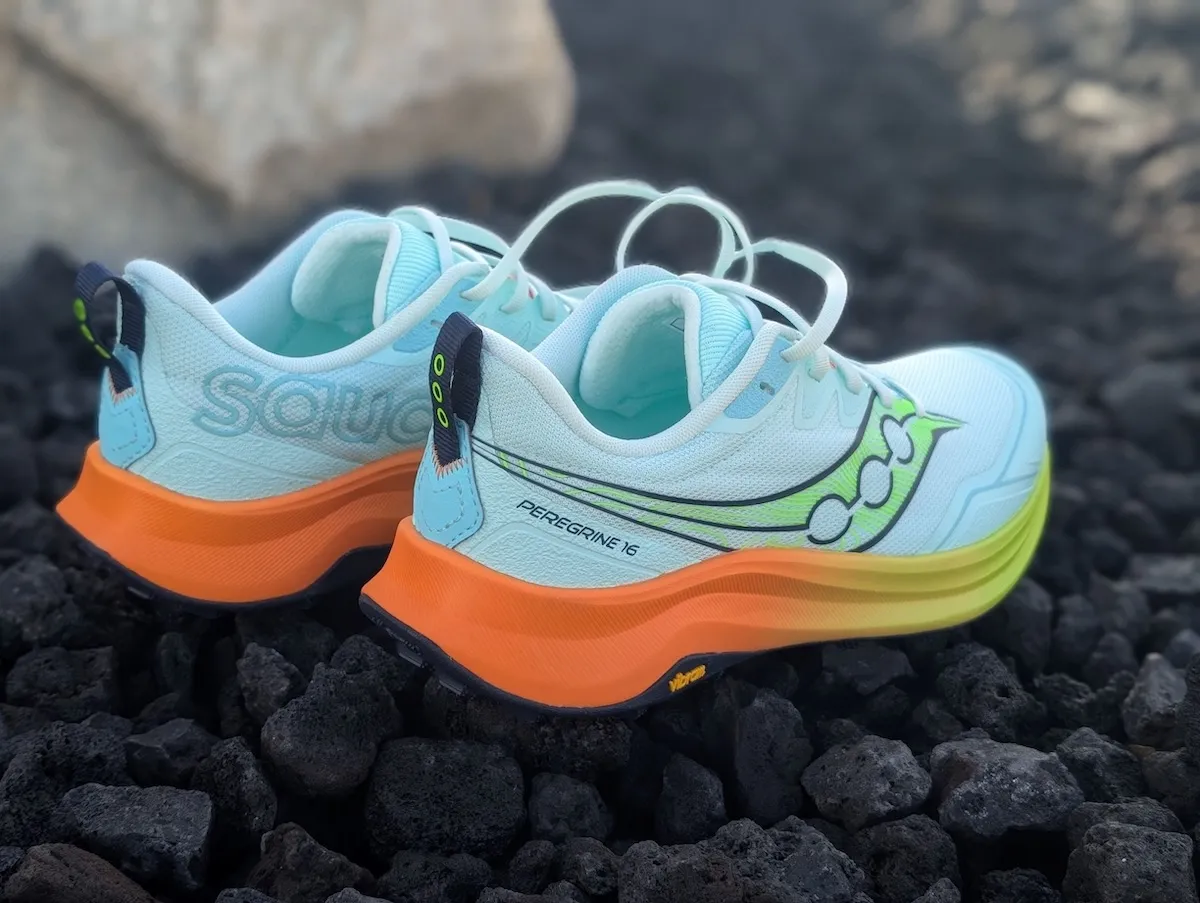
The 4mm heel to toe drop is another reason we’ve long recommended this shoe. It reduces that knee angle and really helps with IT Band issues for a lot of runners.
- Weight: 8.4 oz women’s, 9.5 oz men’s
- Stack Height: 32 mm
- Heel toe drop: 4 mm
- Available in wide and GTX
- Available in 3 colors
- Available at Saucony.com for $145
- Read our full review of the Saucony Peregrine 16 here >>
👉Hoka Speed Goat 6
The Speedgoat is often on many of our best of lists because it’s such a great shoe.
This shoe is best for trail runners who are looking for moderate cushion, plenty of protection and grip to cover a variety of terrain and distances. Great trail race day option as well.
The new foam is a little softer, it feels like there’s a bit more in the forefoot which is really comfortable. The shoe remains light, able to pick up the pace, but with even more energy return from this superior foam. It’s not bouncy like a super foam, it’s not crazy plush, it’s just a really perfect amount of foam for a trail shoe!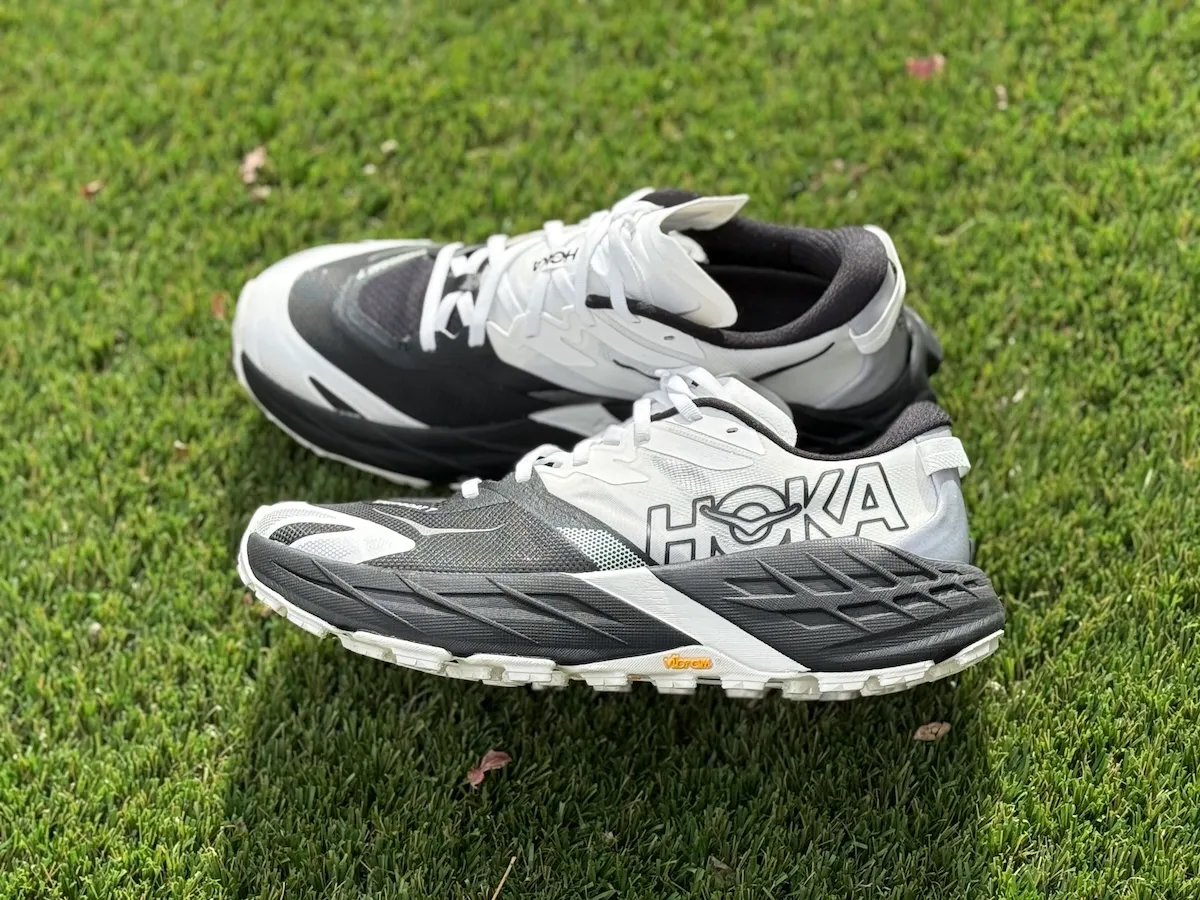
It’s not a stability shoe. Instead, the heel base seems wider and they’ve refined the heel collar to hold you better in place. Each time my foot rolled through a rocky section I could tell there was less dipping of my heel than in the 6. It was a glorious feeling and I already know my ankles are going to be much happier. I’d say anyone with Achilles issues will also appreciate it.
- Heel Drop: 5 mm
- Weight: 8.2 oz women’s, 9.8 oz men’s
- Available in 10 colors
- Available in wide for some colors
- See all HOKA Speedgoat models for $155 (also includes a waterproof option)
- Ready my full Hoka Speedgoat 6 review >>
Carbon Fiber Plate Shoes
Are they cool new technology, yes.
Do they last as long as your other shoes, nope.
So if you want to test these out use them for speed work and then race day!
👉Hoka Cielo X1 3.0
In Hoka’s current lineup, the Cielo sits at the top of the performance pyramid. It’s poppy, aggressive, and light. The Rocket X3 is Hoka’s versatile workout and/or race shoe with much more stability vs. the Cielo. And the Mach X3 is a step below that, being a solid shoe choice for uptempo training days and workouts.
It looks sleek, feels aggressive, the step-in experience was pretty unique. You feel the aggressive rocker in two ways–upon step-in, you’re immediately pushed forward. And while just standing still, you can feel a noticeable drop in the foam right where (on my foot) the metatarsals form.
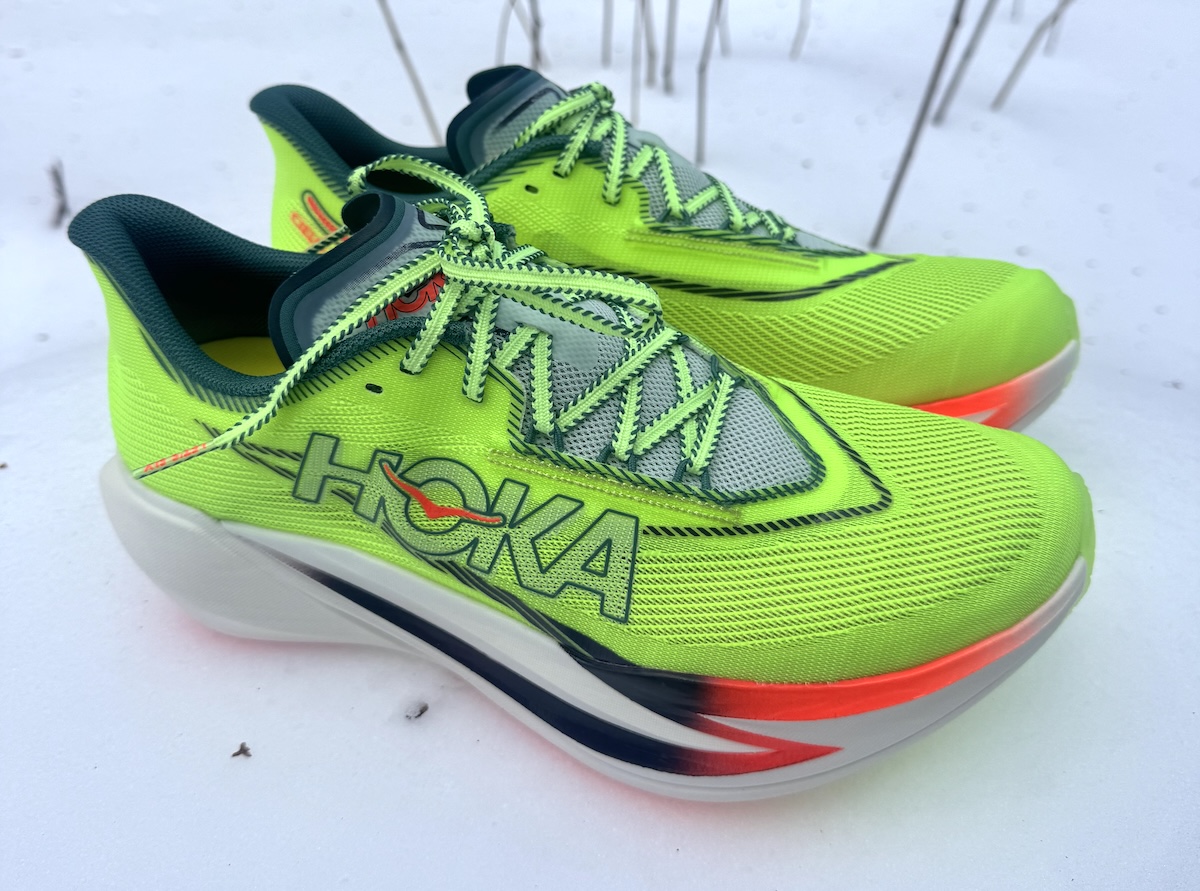 The foam feels full and robust at the ball of the food, and drops away quite substantially at the heel and toes. It’s not uncomfortable, just very distinctive. You know instantly that you’re in a shoe built for one thing: speed.
- Weight: 7.5 oz Men’s 9, 6.2 oz Women’s 8
- Stack Height: 37mm heel / 30mm forefoot
- Heel Drop: 7mm
- Not available in wide
- Available in 1 color
- Available on Hoka.com for $275
- Read our full review of the Hoka Cielo X1 3.0 here >>
👉Saucony Endorphin Elite 2
Designed to help runners unlock their speed, the Saucony Endorphin Elite 2 is a bouncy, high-performance supershoe built for half-marathon to marathon distances. Its standout feature is Saucony’s incrediRUN foam, which delivers insane energy return and next-level cushioning—exactly what you want on race day.
With a daring 39.5mm stack height, Speedroll rocker geometry, and ultra-responsive foam, this shoe is unapologetically built for peak performance.
It has an accommodating forefoot and midfoot with a slightly-snug toe box. If you’re planning to wear this shoe for a half marathon or marathon, I suggest bumping up a half-size as our feet tend to swell a bit during longer efforts.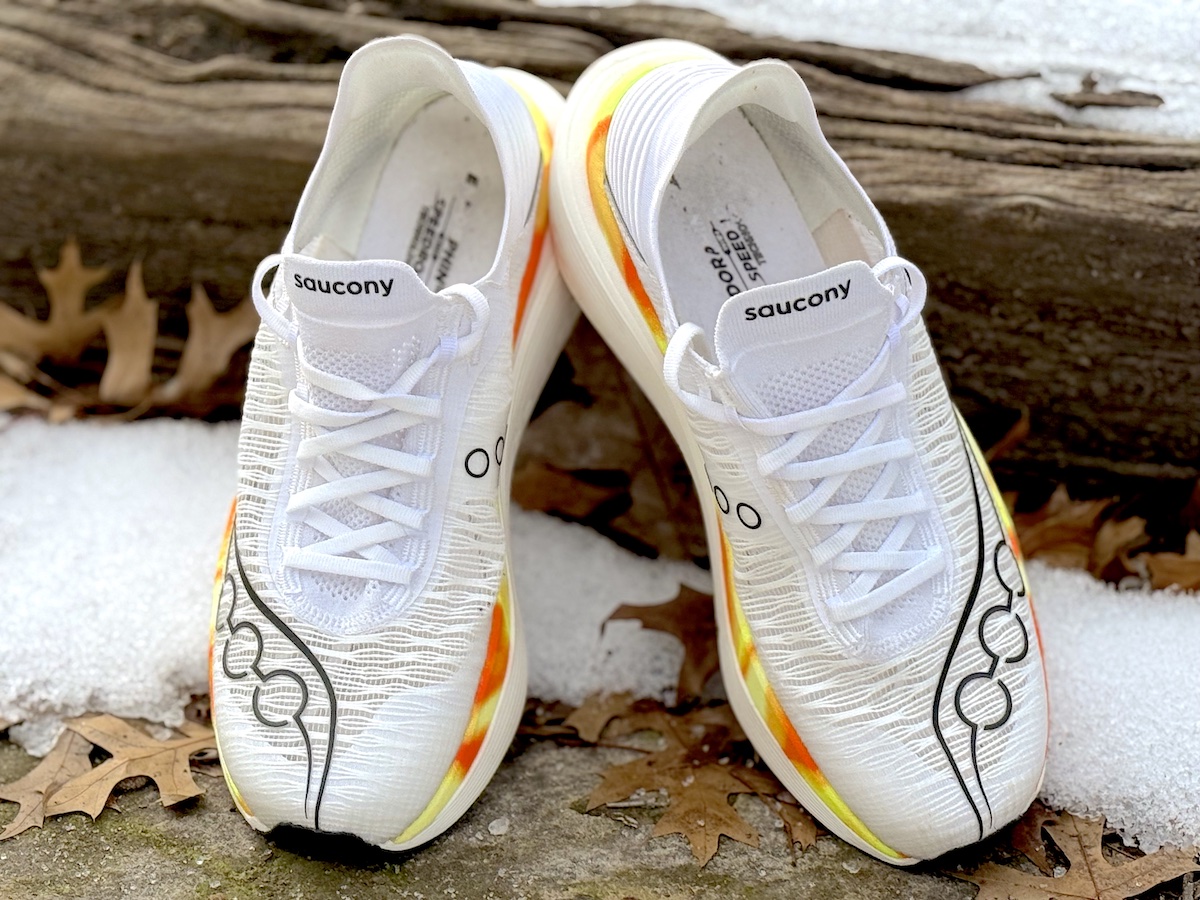
- Weight: 7oz Unisex sizing
- Heel toe: 8mm
- Stack Height: 39.5mm
- Available in 2 colors
- Not available in wide
- Available at Saucony.com for $275
- Check out our full review of the Saucony Endorphin Elite 2 here >>
How do you say Saucony?
Since I used to get this question a ton wearing my Kinvaras, let me help you out.
Sock-a-knee.
It’s actually named after a creek in Pennsylvania and their logo is to represent the flow of water! They really love places for shoe names. I got to visit the actual towns of Kinvara and Kilkenny in Ireland, just a few of their shoe names.
I’ve worn both brands and will add some personal thoughts, along with links to detailed reviews.
Saucony vs HOKA ONE ONE Feature Comparison
Both brands have loyal running fans who will tell you why their shoes are the best. And that’s what makes running shoes so interesting. We all like something just a little different.
Both makers offer options to aid with comfort, support, stability, and cushion. Where they differ most are in the feel of the shoe while running.
The following breaks down each shoe based on the components buyers need to consider when purchasing a running shoe.
It’s gonna get a little TECHY…so you can just skip on down to the specific model comparison if you want, but personally if I’m shelling out $150 for shoes, I kinda want to know why.
Durability
The lifespan of shoes from both companies is fairly comparable.
- Saucony states their shoes last around 400 miles, which is pretty average. The new Endorphin pro with the carbon fiber plate is more like a racing shoe and therefore only expected to last around 200 miles.
- HOKA is often reported to last longer. I don’t know if this is more trail runners and thus less hard surfaces which extends the life of the shoe or simply their maximal design.
Determining when to replace running shoes, of course, all depends on your gait, weight, and whether you run mostly on trail or road.
Shoe Fit
Saucony has their own Shoe Advisor to help put you in the right model. I’ve always found them to run true to size, but some are for a more narrow foot.
Their often lower heel to toe drop and cushion make them a favorite of distance runners, who find the decreased drop helps with issues like IT Band Syndrome and ensures they are working on hip strength over a shoe correcting a weakness.
HOKA shoes run true to size from my testing. Some models are definitely a little more narrow than others, as with most brands. In fact, they have been working on increasing the toebox in newer models and I would say it’s more comfortable for a wider foot and with more toe room than most On shoes.
They also have a shoe finder quiz to help you get in to the right model.
Cushioning
Saucony has transitioned most of their shoes to PWRRUN technology, which they promote as a better than the standard EVA foam used by most brands.
- PWRRUN+ midsole cushioning provides more flexibility, durability, and springiness in a foam that’s 25% lighter
- Again and again their focus comes back to lighter, flexible for more power in your take off and more energy return
HOKA likes to say they provide marshmallow softness. More technically PROFLY.
I’m going to admit that I was really skeptical of HOKA at the start because I assumed all that cushion would make it heavy. It turned out I was wrong and instead have been running in them since of their very first shoes.
- They have 3 levels of cushion, which is important because plush isn’t what you want on all runs
- Cushion that provides both a good landing and plenty of stability for push off
- Hubble Heel – their newest shoes with a longer heel which is supposed to improve heel to toe transition

Stability
HOKA was designed entirely with stability in mind.
It was a core foundation of their shoes because it allows runners to move quicker with less risk of injury. This is why they created a wide stable platform.
In fact, they call their heel system the “bucket seat”, like the seat of a race car. It cushions the heel and foot without posts or guide rails — this means the midsole remains more cushioned.
Because of this wider platform, Hoka is often a shoe we’re recommending as the best shoes for standing all day. They’ll keep your feet comfortable and supported.
Saucony has also been transitioning to less aggressive stability tools, ensuring the shoe is not over correcting or doing the work for you.
They utilize a medial post (which is a device within the midsole that is firmer) to help provide control and a TPU heel plate which again makes the rides slightly firmer and adds control. Thanks to the cushioning, you don’t so much notice the stiffness and reap the benefits.

Overview of heel to toe drop and type of cushion in most shoe brands.
Affordability
The prices between the two brands are fairly comparable. Saucony prices range between $100 to $170, and HOKA’s start at a at $120 to $250.
The most popular models for Saucony are around $130 and for HOKA also around $150.
Specialty items with more features (like carbon plates) will increase price.
You’ll notice that every brand offers a range and this is indeed due to a difference in technology and where they sell the shoe. They know that the big box store can sell the shoe with less in it, while the local running store needs to be best for dedicated runners.
What about the Endorphin Line?
Because Saucony really shook things up introducing a whole new line of shoes, it feels like there needs to be at least some discussion here!
One of the big things they talk about is the Speed Roll to help roll your foot forward, which is actually pretty similar to the rocker that Skechers put in their running shoes from the start.
- Endorphin Pro – Designed for speed with the carbon fiber plate, this is your race shoe
- Endorphin Shift – This feels like a cushioned slightly stabilizing shoe, good for everyday training.
- Endorphin Speed – Also designed to be a neutral, cushioned shoe you can take to the race, but without the carbon fiber plat
- Coming in 2025 the Endorphin Trainer
Watch my detailed video on how Carbon Fiber Shoes work.
More about Saucony
Like another well known running brand (New Balance), Saucony started it’s first factory in 1898. And by 1910 they were making running spikes…but few people were running or even looking for running shoes, so it wasn’t until the 1970’s that they started to grow.
First they became known for their casual shoe with it’s cool style and then, the big time hit.
Runner’s World featured them in 1979 as a top 10 running shoe. By the 80’s they were making shoes with a non-slip sole which was a big innovation.
Then came 2009 and the Saucony Kinvara – this one shoe changed many things about their design and philosophy. It was the more natural running shoe (yes during the barefoot trend). The new goal became how to strip shoes down, without sacrificing cushion and comfort.
Good performance, good health and good community are their guiding principles. You may have seen their hashtag #runforgood – which is really about doing good, giving back and finding sustainable practices.
More about HOKA ONE ONE
Let’s start with how do you pronounce Hoka One One? “Ho-Kah O-nay O-nay” which is a Māori phrase that means “to fly over the earth.”
But they’re kind of like Madonna and just need one name: Hoka.
Founded by two mountain trail runners in the Swiss Alps, Nicolas Mermoud and Jean-Luc Diard, former Salomon employees, had an epiphany during their training that lead to the foundation of a new shoe and new company in 2009.
This makes them a mere baby in the world of running shoes, as many of the brands from Brooks to ASICS have been around 100+ years now. Pictured here is their first prototype.
At first they simply wanted a shoe that would allow them to run downhill faster and thus win!
Quickly they realized there was something more here with a smooth, super light, cushioned and stable shoe. Their maximal design took many of by surprise in a time where Zero Drop running shoes and Barefoot running were the in thing.
In 202o, the company was purchased by Deckers (owners of UGG and Teva). Hopefully that just means more marketing to keep the shoes going and not a change to what their doing right.
Your gait and feet will likely change over time and you may need to change shoes.
This is also why I recommend rotating through several pairs of shoes at once.
And remember, just because these are two of the most well known brands on the market, there are still plenty of other shoe brands to select from if neither On nor HOKA has the right shoe for you.
Keep in mind that shoe design can change, even with the same model, so always assess how the shoe fits every time you replace a pair.
For more help selecting the right shoe for you, don’t worry, I’ve got you:
- Nike Vs New Balance running shoes
- Altra Running Shoes Review
- Top 5 Marathon Running Shoes
- New Balance Vs Brooks
- Best Narrow Feet Running Shoes
Other ways to connect with Amanda
Instagram Daily Fun: RunToTheFinish
Facebook Community Chatter: RunToTheFinish
Sign Up to Receive a Weekly Newsletter with Top Running Tips and Laughs



 Kuru TRIPLE MAX Ion Shoe Review: PF Running Shoe Winner